

Unveiling the Enigma of PPP (Private Placement Programs)
In the intricate realm of finance, PPP, also known as “high-profit investment or leverage programs,” stand out. As exclusive and lucrative trading opportunities for financial instruments, particularly Medium Term Notes (MTNs). These PPP programs are meticulously orchestrated to offer a unique avenue for investors to capitalise on the dynamic market for trading bank assets.
The Essence of a Private Placement Program
At the core of PPP lies a sophisticated strategy known as arbitrage. This approach involves acquiring MTN’s at a substantial discount below their original value and subsequently reselling them at a higher price. This meticulously crafted process enables investors to harness the differential between the buying and selling prices, generating significant profits.
To illustrate the concept of arbitrage, consider the following analogy:
Imagine an individual or company seeking to purchase a car with the intention of reselling it. The desired car costs €10,000. Before making the purchase, the individual secures a buyer willing to acquire the car for €10,500, guaranteeing a profit of €500. This planned buy-sell transaction, orchestrated in advance, exemplifies arbitrage, a fundamental principle underlying PPP.
Distinctive Features of PPP or Private Placement Programs
Arbitrage-Driven Transactions: PPP transactions are meticulously structured as arbitrage, ensuring a secure and seamless purchase-resale process. The financial instruments never reach the end buyer directly but rather pass through a chain of market participants, ensuring transparency and efficiency.
Leverage Effect: Banks indirectly benefit from PPP by earning interest on the line of credit granted to the operator. This phenomenon, known as leverage, allows banks to generate additional revenue while also profiting from transaction commissions.
Exceptional Returns: Compared to traditional investments, PPP generally deliver exceptional returns, with yields ranging from 50% to 100% per week. This remarkable profitability has attracted a growing number of investors seeking to diversify their portfolios.
Project Financing: PPP serve as a valuable tool for financing large-scale projects, particularly in developing nations. By providing access to significant capital, PPPs facilitate the development of infrastructure, businesses, and other critical initiatives.
Eligibility and Assets Accepted
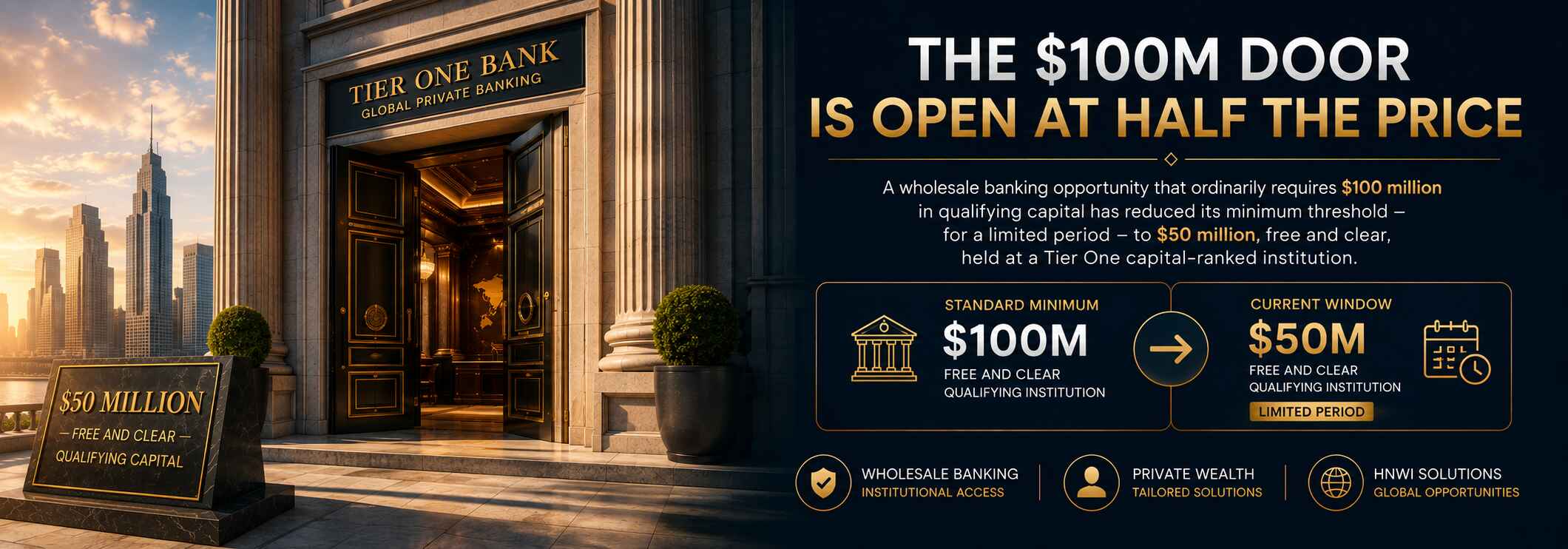
Participation in PPP typically demands a substantial investment, so is designed for UHBWI. However, Vital Capital offers a unique opportunity to participate in secure PPP without transferring funds, utilising CASH or a financial instrument (SBLC, MTN, or similar). For investors seeking a lower entry point, Small Cap programs we can from time to time introduce offer access with investments start at 1m, potentially generating sensible monthly over a 12-month period.
Financial institutions routinely deposit billions to secure funding for large-scale projects, primarily in developing countries. Investors in these programs enter into joint ventures with trading groups, with profits distributed to designated beneficiaries.
A variety of assets are acceptable for use in PPP transactions, including:
- Durable goods: precious metals (gold, silver, platinum), diamonds, art collections, etc.
- “Inground” assets: precious metals and stones (gold, silver, diamonds, emeralds, etc.)
- Bank guarantees (BG)
- Standby letters of credit (SBLC or Standy Letter of Credit)
- Medium term notes (MTNs)
Concluding Remarks
Private placement programs have emerged as a compelling investment opportunity, providing investors with access to the lucrative market for trading bank assets. These programs, characterised by arbitrage-driven transactions, leverage effects, and high profitability potential, have become a valuable tool for financing large-scale projects and generating substantial returns.
For more information on your specific project funding requirements, please CLICK here to e-mail Us to complete our form. Alternatively see our Wholesale Banking page.





About the author